From between the stelae.
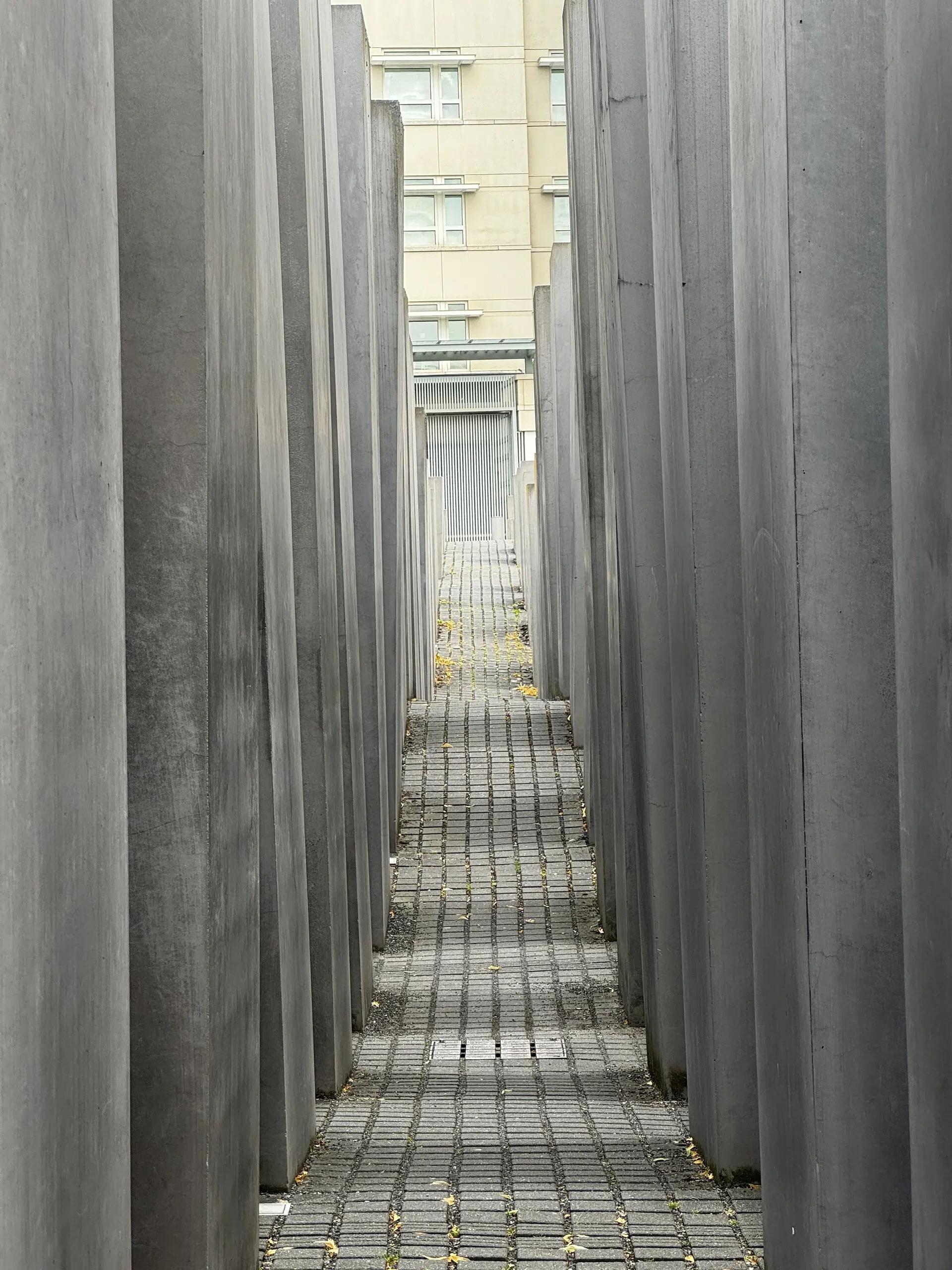
Within the deepest portion of the Memorial to the Murdered Jews of Europe, the tallest stelae stand on either side, creating a maze-like path through the memorial. The memorial features 2,711 stelae of varying heights, creating a disorienting, solemn experience meant to evoke feelings of isolation, confusion, and reflection—paralleling the Holocaust's emotional and historical weight.
And the clock strikes…
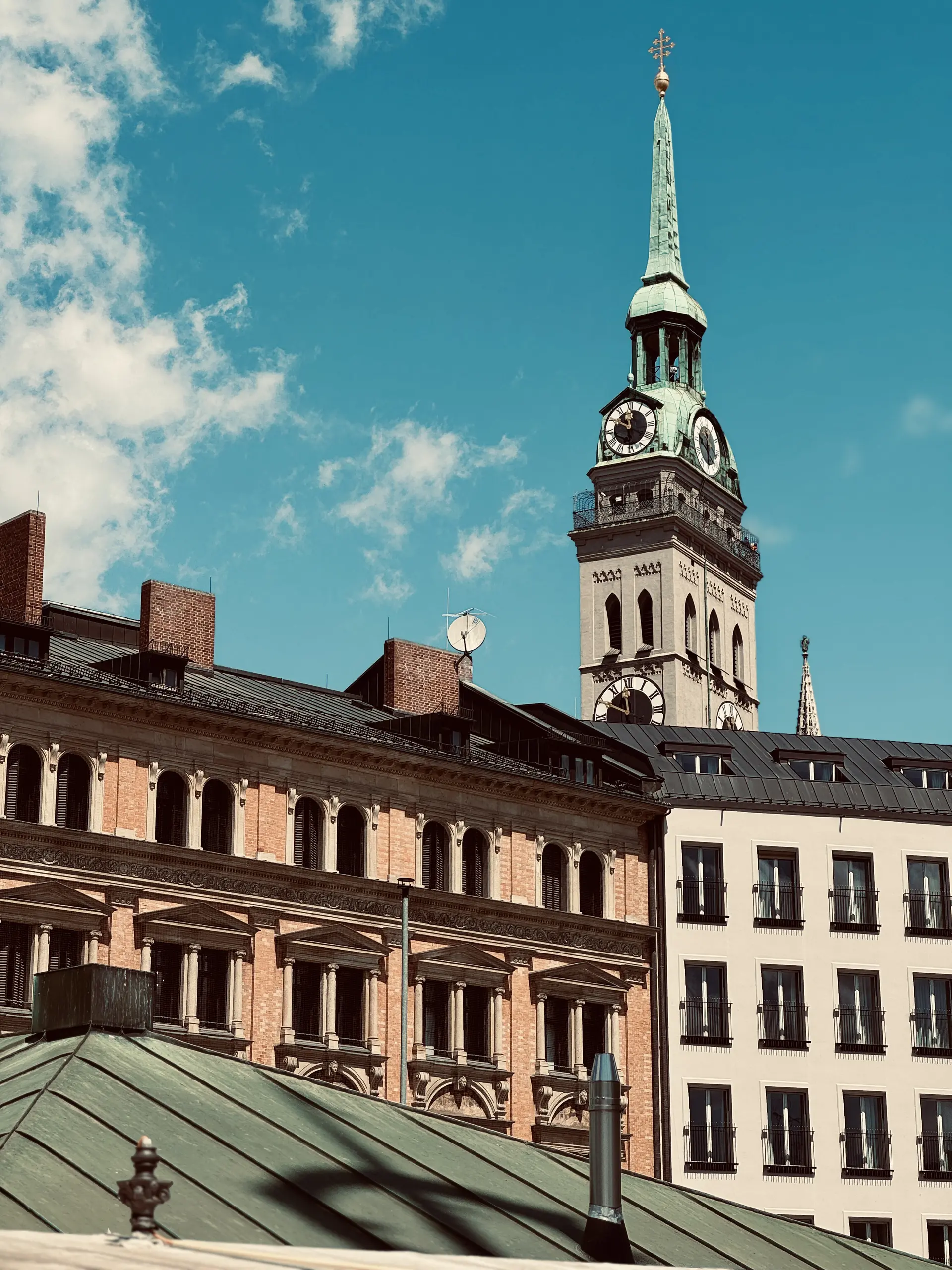
Over the surrounding buildings, the clock tower stands atop St. Peter's Church (Peterskirche) in Munich. The Roman Catholic church is the oldest in Munich, referred to by locals as Old Peter (Alter Peter). The tower measures 91 meters (298 feet) tall and features clock faces on all four sides, with a viewing platform offering a full 360-degree view of Munich and the Alps.
The jewel of the Bavarian Alps.
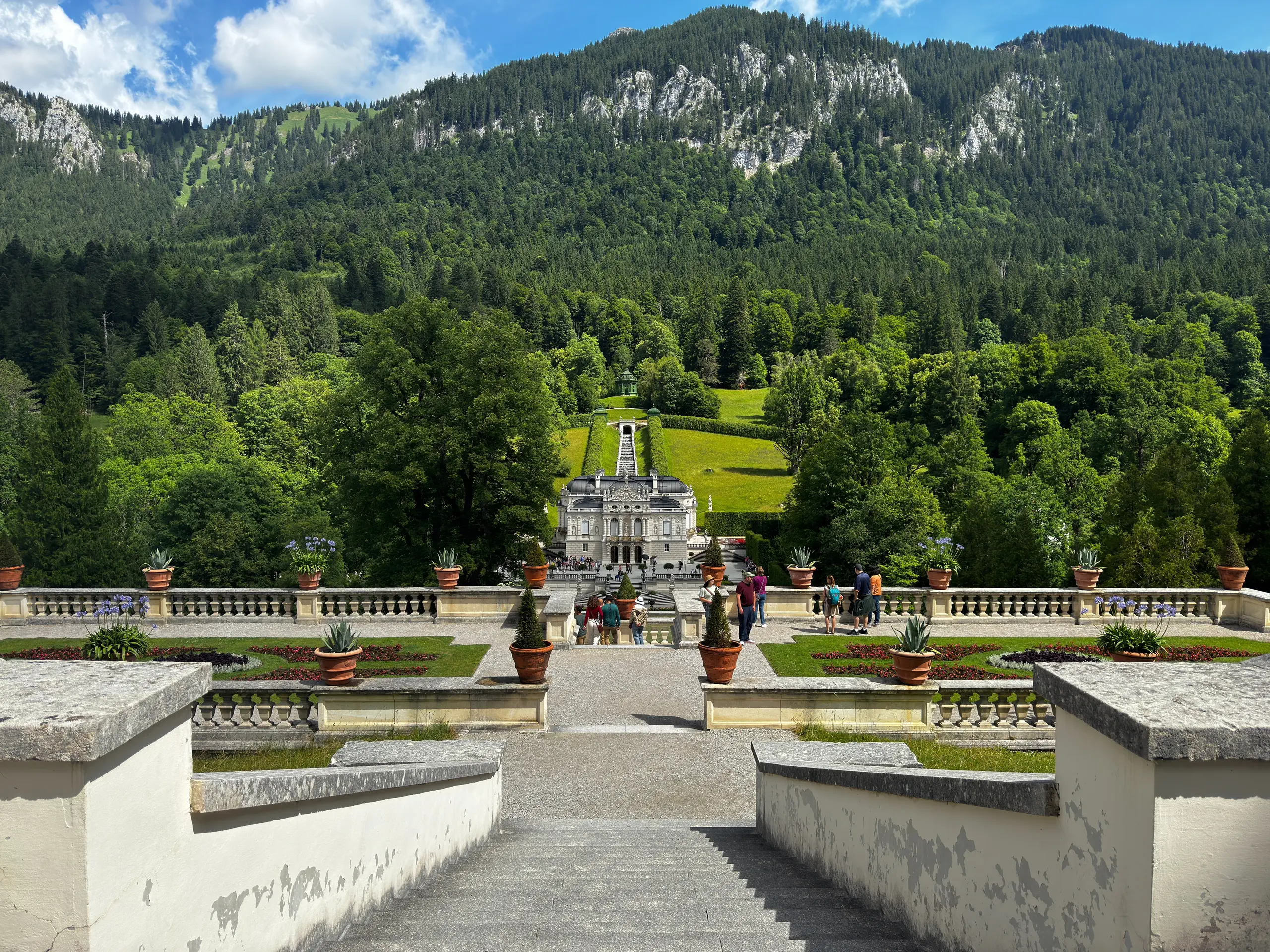
Built in a valley surrounded by the Bavarian Alps, Linderhof Palace (Schloss Linderhof) sits quietly as a retreat for the late "Mad King," King Ludwig II of Bavaria. It's one of three famous palaces he ordered, and the only one to finish construction during his lifetime.
The nickname "Mad King" comes from Ludwig's eccentric behavior; he was deeply reclusive, spent enormous amounts on elaborate castles with little concern for the state he had to rule, and withdrew further from government affairs as he grew older. In 1886, he was declared mentally unfit to rule by a panel of doctors — none of whom examined him—and was deposed.
Ludwig had a mysterious death, found dead in Lake Starnberg along with his psychiatrist. The official cause of death was suicide by drowning.
Quadriga of unity.
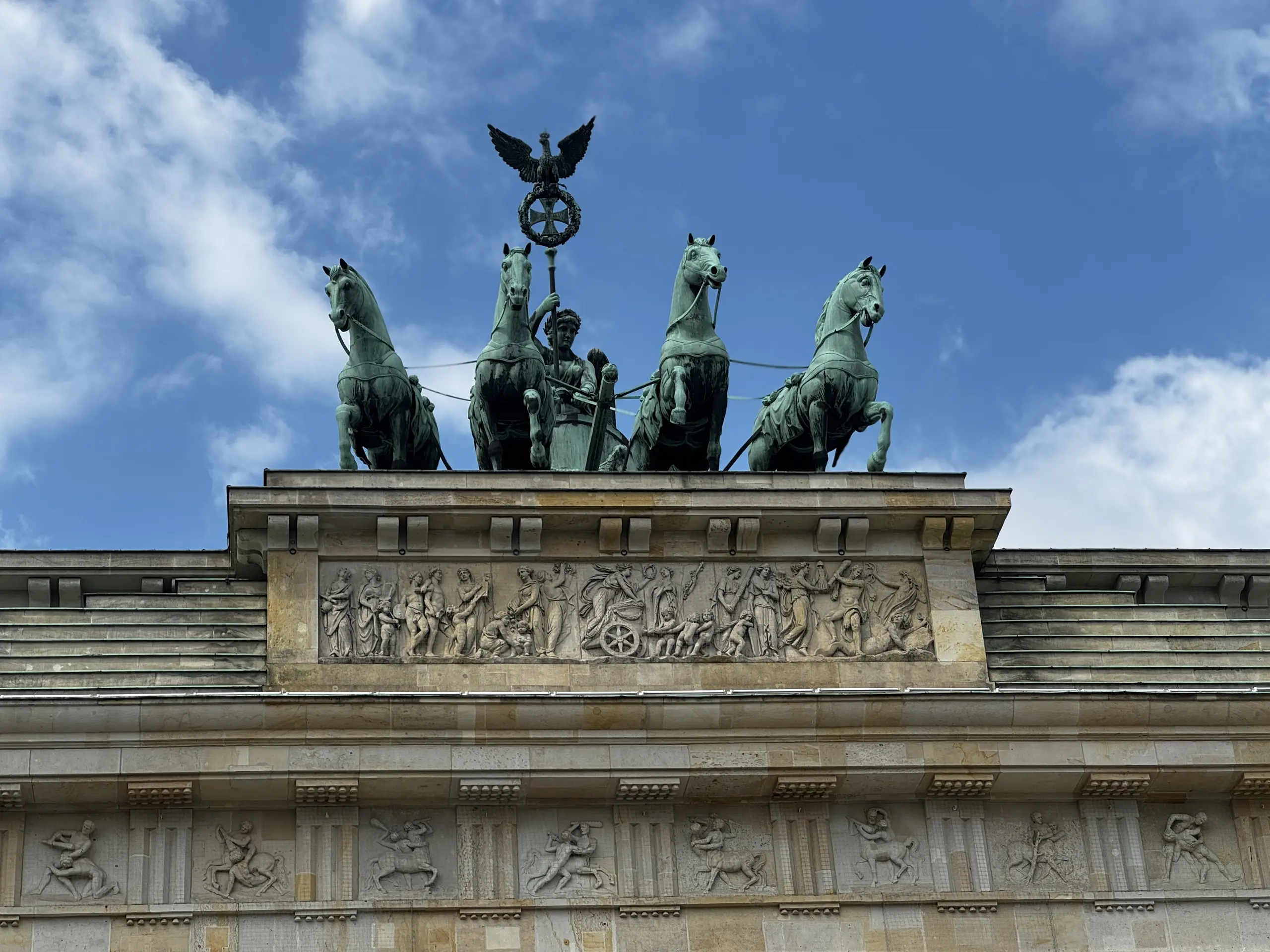
Atop the center of the Brandenburg Gate, the Quadriga (a four-horse chariot) carries the Roman goddess Victoria, goddess of victory. The gate, designed in the neoclassical style, was commissioned by Prussian King Frederick William II in 1788 and took three years to complete. It was originally meant to serve as a city gate; by the time construction finished, the city had grown beyond it, leaving the gate as a ceremonial monument.
After Napoleon defeated Prussia during the Napoleonic era, he marched his troops through it. Similarly, during World War II, the Nazis used the gate for propaganda marches and rallies. The gate was severely damaged during the bombing of Berlin—but it survived.